

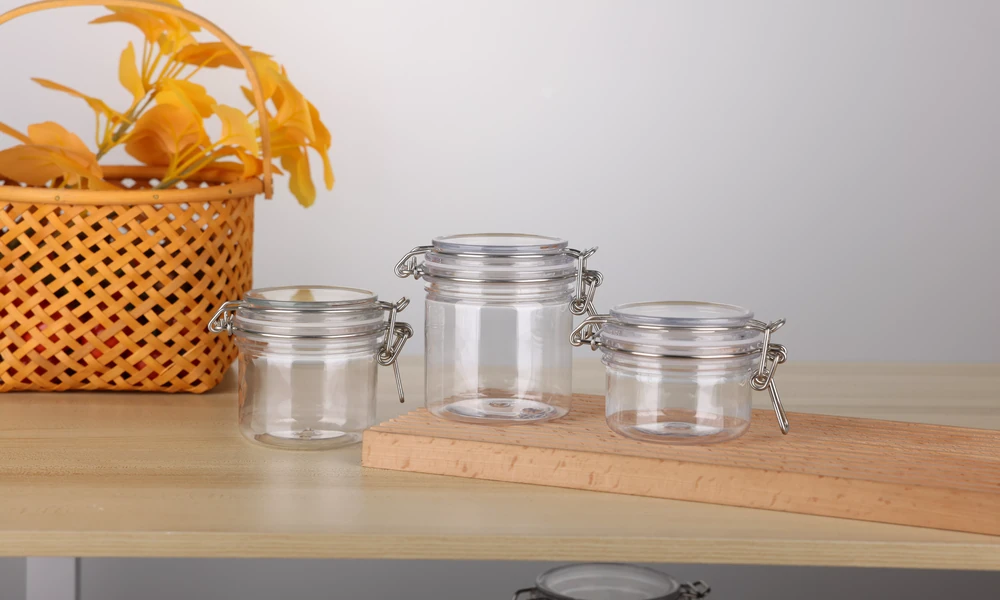
People often assume a lid that locks is mainly about keeping contents fresh, but the locking mechanism itself solves a separate problem entirely: containment when a jar is knocked over, transported, or handled by someone other than whoever packed it. A jar with lock lid keeps its contents secure through drops, tips and rough handling in a way an ordinary press-fit lid simply cannot guarantee, which matters as much for a moving box as it does for a kitchen shelf.
What Locking Actually Protects Against
A locked lid resists two distinct failure modes: gradual loosening from repeated handling, and sudden popping open from an impact such as a fall or a knock during transport. Standard snap lids handle the first reasonably well but fail badly at the second, since a hard enough jolt can pop even a well-fitted snap lid loose in a way a mechanical lock is specifically designed to prevent from happening at all.
Types of Locking Mechanisms Available
Side-clip designs use two or four latches around the rim that snap into moulded catches on the lid, distributing closing pressure evenly around the seal. Clamp-style locks use a single hinged arm for a stronger, more deliberate closing action, while screw-collar designs combine a threaded ring with a separate seal, trading one-handed convenience for an especially tight and dependable closure. Each mechanism suits a different balance of speed, strength and one-handed convenience during daily use, and the right choice often depends more on who is opening the jar than on what is stored inside it.
Why Transport and Travel Benefit Most
Anything moved between locations, whether that’s a packed lunch, a moving box, or stock being delivered to a retail outlet, faces vibration and occasional impact that a shelf-bound jar never experiences. A locking lid removes the anxiety of checking whether a container survived the trip intact, since the mechanism is designed specifically to withstand exactly that kind of rough, unpredictable handling along the way.
Child Safety and Accidental Opening
Locking lids require a deliberate two-step action to open, which makes accidental opening by young children considerably less likely than with a simple push-and-twist lid. For households storing anything from craft supplies to small hardware, a secure clamp-lid food container adds a genuine safety margin without requiring a specialised child-resistant design.
Sealing Performance Compared to Standard Lids
Because a lock applies even, sustained pressure rather than relying on the plastic’s own elasticity to hold a lid in place, the seal tends to remain reliable for far longer than a snap-fit design, which loosens as the plastic fatigues with repeated flexing. This makes locking lids a better long-term choice for anything opened and closed daily over months or years of use, particularly where a consistent seal matters more than replacing a worn container occasionally.
Material and Build Quality Considerations
The lock mechanism itself needs to be built from a material that will not fatigue or crack under repeated use, since a broken latch defeats the entire purpose of choosing a locking design in the first place. Reinforced hinge points and a slightly thicker rim around the latch area are worth checking for, since this is where most locking lids eventually fail if they fail at all, long before the jar body itself shows any sign of wear.
Common Uses Beyond the Kitchen
Workshops use locking jars for small hardware and fasteners that would otherwise scatter if a container tipped over on a shelf, while hobbyists rely on them for beads, paint and other craft supplies where spillage means a genuinely tedious clean-up. Locking containers also suit emergency kits and first-aid supplies, where a secure seal against moisture matters as much as easy identification of contents. Pet owners often use them for treats and kibble too, since the seal keeps both freshness and curious pets out.
Maintaining the Lock Over Time
Grit or food residue trapped in the latch mechanism can prevent it from closing fully, so an occasional rinse of the hinge and catch area, not just the jar body, keeps the lock functioning as intended. Lubricating a stiff hinge with a small amount of food-safe silicone spray can also restore smooth action to a mechanism that has become difficult to close, and doing this every few months prevents most lock failures before they start.
Comparing Cost Against Ordinary Containers
Locking jars typically cost more per unit than basic snap-lid equivalents, but the difference is often modest relative to the reduced risk of spills, breakage and repeated replacement over the container’s working life. For anything transported regularly or handled by multiple people, the extra reliability tends to justify the small premium over standard alternatives, especially once the cost of a single spilled batch is taken into account, and once the cost of the repeat purchase a failed lid forces is added to the total as well.
Choosing the Right Locking Jar for Your Use
Match the locking mechanism to how the jar will actually be used, prioritising clamp or screw-collar designs for frequent transport and simpler clip latches for shelf storage that rarely moves. A well-chosen jar with lock lid earns its slightly higher cost back quickly through fewer spills, longer seal life and genuine peace of mind during transport.